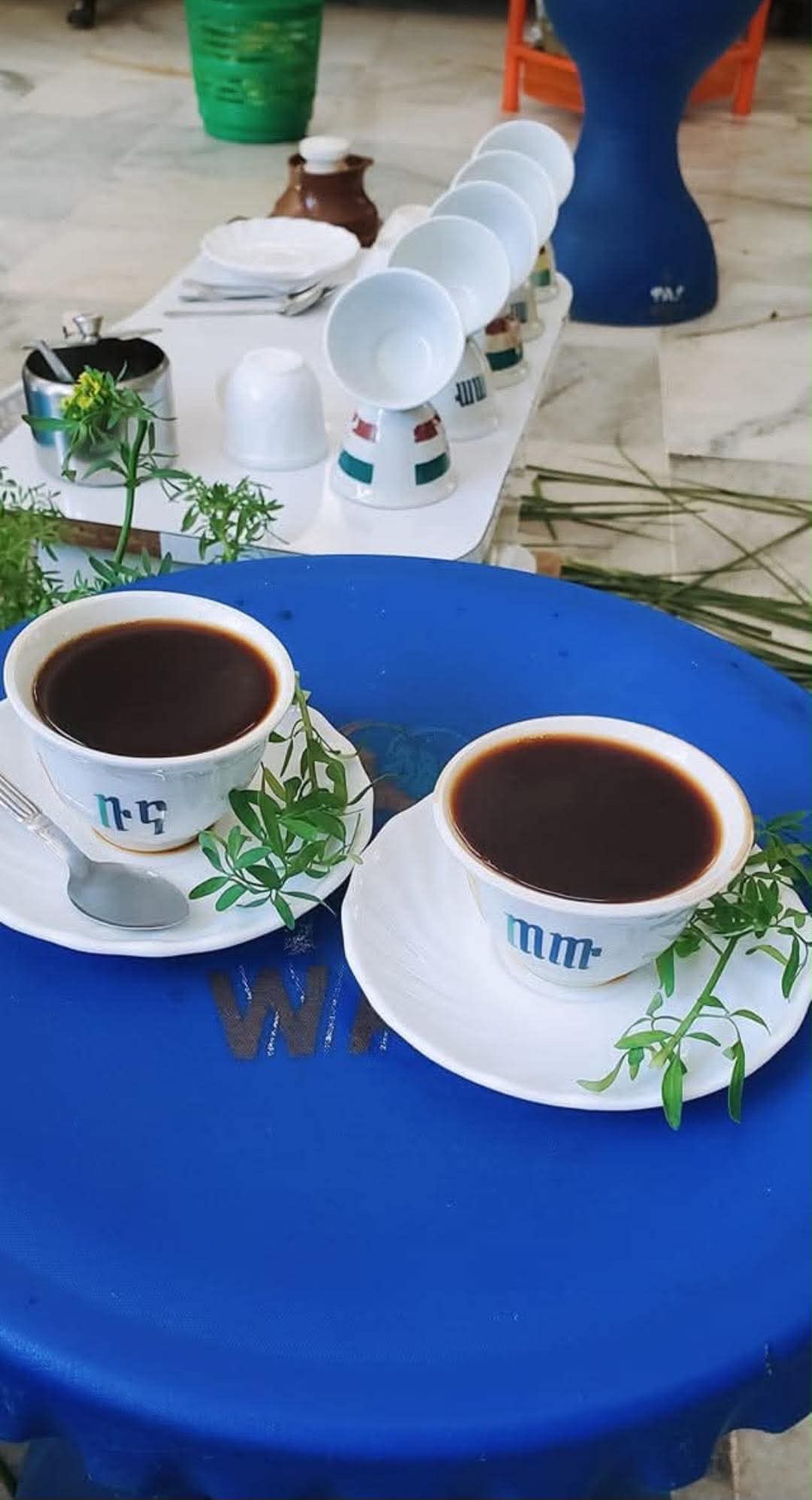
Last time, I promised to explain what separates a “heirloom” Ethiopian coffee from a named variety. Here it is — and it’s worth getting right, because most bags of coffee use these words like they’re interchangeable. They’re not.
At Melko (Jimma Agricultural Research Center), I remember standing in the trial fields looking at rows of coffee that had been through decades of formal selection and release — trees chosen, tested, and named by researchers because they showed some useful trait: better yield, resistance to a disease, a particular cup quality. That’s a named variety. It has a lineage you can trace on paper.
Then there’s everything else growing across Ethiopia’s highlands — coffee that farmers have kept, replanted, and quietly selected themselves, generation after generation, without ever going through a research station. No official name. No formal record. Just what worked, passed down. That’s what people mean by landrace, or “heirloom” in the way it gets used on coffee bags. And further back than that, there’s coffee nobody planted at all — wild populations still growing under forest canopy, the way it always has.
Three different things. Wild coffee is what nature left standing. Landrace or heirloom coffee is what generations of farmers shaped by hand, without a lab. Named varieties are what a research institution formally selected and released. All three exist in Ethiopia, often within a short drive of each other — which is part of why “Ethiopian coffee” was never one thing to begin with.
Why the Distinction Actually Matters
This isn’t just trivia for people who like precise labels.
Coffee agriculture worldwide is under pressure — shifting temperatures, unpredictable rainfall, new pests and diseases. When researchers go looking for coffee plants with useful resistance or resilience, landrace and wild populations are often where they find it. Diversity that farmers protected without knowing why it mattered scientifically is now one of coffee’s most valuable resources.
And it matters to what’s in your cup. A landrace population selected by one family in one valley can taste completely different from a landrace selected by another family a mountain range away — not because anyone was chasing a flavor, but because generations of local adaptation and local taste quietly shaped what survived. That’s not marketing language. That’s the actual mechanism behind why one Ethiopian coffee tastes like jasmine and citrus and another tastes deep and wine-like.
The Land Finishes the Story
Variety is only half of it. Coffee is a plant, and plants answer to where they’re planted.
Elevation, soil, rainfall, shade — all of it interacts with whatever variety, landrace, or wild population is growing there, and with how it’s farmed and processed afterward. Two genetically similar coffee populations grown in different conditions won’t taste the same. This is why I keep telling people: don’t just buy a bag labeled “Ethiopian coffee.” Look for where, specifically, it came from.
Once you start asking that question, you start asking all the others:
- What kind of coffee is this — wild, landrace, or a named variety?
- Where exactly was it grown?
- How was it processed?
- Who grew or processed it?
- Why does it taste the way it does?
That’s the shift from drinking coffee to exploring it. And it’s exactly where I want to take you next — into the actual regions. Yirgacheffe, Guji, Sidama, Harar: same country, same crop in the broadest sense, four completely different stories in the cup.
Previous: [Where My Coffee Story Begins] | Next: [A Taste of Ethiopia — Yirgacheffe, Guji, Sidama, and Harar]
Leave a Reply